
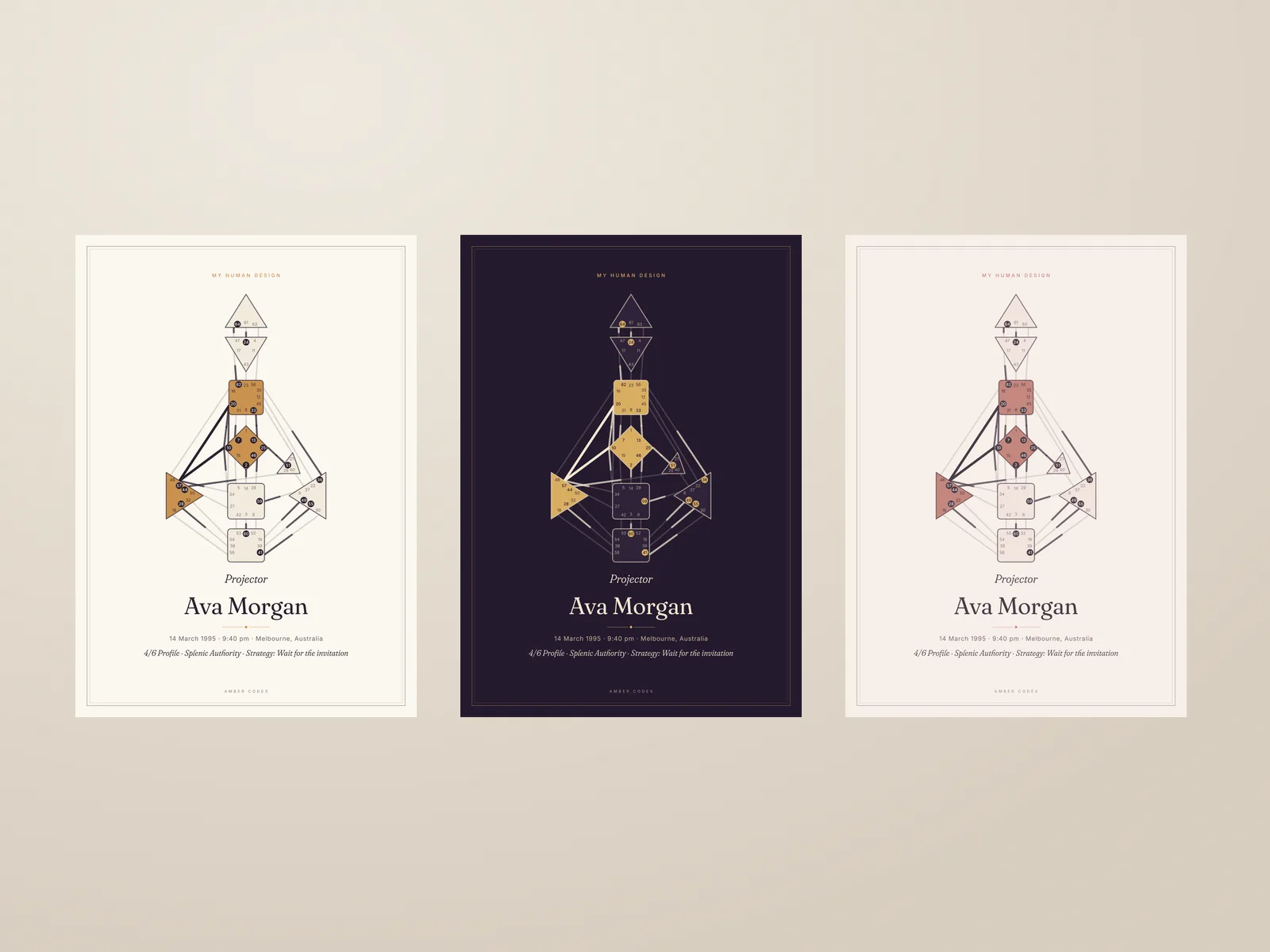
Human Design is a modern system (1987) that combines astrology, the I Ching, the Kabbalah and the chakras into a single chart called a bodygraph. Whatever you think of the mix, the types it describes have become a common language for talking about energy, and they are a useful place to start. Here they are without the jargon.
Generator (about 37% of people)
The defined Sacral centre is the engine. Generators have steady, renewable energy for work and life, and they feel best when that energy goes into something they genuinely want to do. Their strategy is to wait to respond: let life bring something, then follow the gut yes or no. On track, the feeling is satisfaction. Off track, frustration, usually from saying yes to things the gut said no to.
Manifesting Generator (about 33%)
A Generator with a direct line from the Sacral (or another motor) to the Throat. Fast, multi-passionate, likely to skip steps and do several things at once. Same strategy, wait to respond, with one addition: inform the people affected before acting, because moving fast without warning is where the friction comes from. On track: satisfaction. Off track: frustration and anger.
Projector (about 20%)
No defined Sacral. Projectors are built to see people and systems clearly and to guide, not to grind. Their energy works in bursts, so rest matters, and a Projector trying to keep up with Generators burns out. Strategy: wait for recognition and invitation, especially for the big things, work, love and where to live. On track, the feeling is success. Off track, bitterness, the sense of not being seen.
Manifestor (about 9%)
A motor connected to the Throat, but no Sacral. Manifestors initiate: they start things and make an impact, and they need freedom to act. Strategy: inform people before you act, which smooths the path and stops the resistance Manifestors meet when they move without warning. On track: peace. Off track: anger.
Reflector (about 1%)
No defined centres at all. Reflectors take in and mirror the people and places around them, which makes them unusually sensitive to their environment and good at sensing the health of a group. Strategy: take time with big decisions, ideally a full lunar cycle of about 28 days. On track: surprise and delight. Off track: disappointment.
The type is the start, not the end
Two Projectors can be nothing alike, because type is only the first layer. Beneath it sits your authority (how you decide), your profile (the two lines that describe how you meet the world), your definition, and the nine centres themselves, each defined or open. The centres are where the practical gold is: an open centre is where you take in and amplify other people, and each one has a classic question to ask yourself, like "Am I trying to prove my worth?" for an open Heart.
Finding your type
Human Design needs a birth time to the minute or within about half an hour, because the chart is calculated from the birth moment and a moment about three months before it, and it can change within hours. With that, any Human Design calculator will give you the type. A reading is where it gets explained, centre by centre, with things to try.
Your type, authority, profile, centres and channels with your bodygraph, from your birth details. Instant.
Questions
Which Human Design type is the rarest?
Reflectors, at about one percent of people. Manifestors are next at around nine percent.
Can I work out my type without a birth time?
Sometimes. If your type stays the same across the whole birth day it can be confirmed, but for many people it changes within the day, so a time is needed to be sure.
Is Human Design the same as astrology?
No. It uses the positions of the planets at birth, like astrology, but maps them onto the 64 hexagrams of the I Ching and a chart of nine centres. The type, strategy and authority have no equivalent in a birth chart.